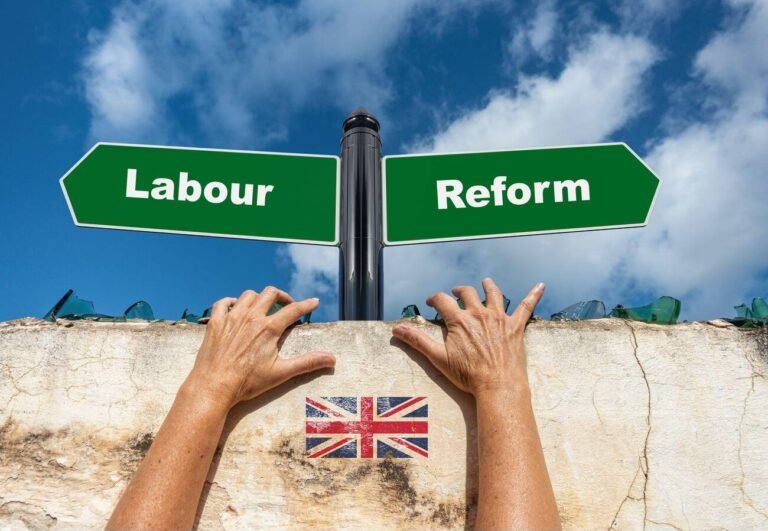
The May 2026 elections, the largest since 2024, will be held on Thursday, 7 May. Voters in Scotland and Wales will elect their national parliament representatives. These elections contest over 4,800 council seats in England, mayors for key areas, and the Welsh and Scottish parliaments. For the first time at this scale, voters must bring a valid photo ID, per the Electoral Commission.
May 2026 Elections: Photo ID for Voting
England will hold several local council and mayoral elections, including 30 council contests, following the government’s decision not to delay them. In Northern Ireland, local council and Assembly elections are scheduled for May 2027.
There are several ways to vote in May this year: in a polling station, by post, or by appointing someone to vote on your behalf, known as a proxy vote. The UK Government asked voters to show photo ID when voting at a polling station.
May 2026 Elections: Possible Losers and Winners
The May 2026 elections present significant challenges for some parties. Both the Conservatives and Labour are projected to face historic losses, according to polling models. Reform UK is expected to achieve a breakthrough in Scotland, with projections indicating they may win 20 MSPs. The SNP is estimated to secure 67 seats, resulting in a five-seat majority, and 89% of simulations predict an SNP majority.
Labour is expected to win no constituency seats and is projected to secure 15 seats overall. The Conservatives are forecast to receive only 8% of the vote in Scotland, marking their worst result and potentially dropping to sixth place. The Greens and Liberal Democrats are predicted to increase their representation, likely gaining 11 and nine seats, respectively, including a projected narrow win for the Greens in Edinburgh Central.
May 2026 Elections: Rise of Reform
The latest YouGov voting intention poll for The Times and Sky News shows Reform UK leading on 24% of the vote, with the Greens down three points on our previous poll. Some other parties are as follows: Conservatives19%; Labour 16%
Recently, more people have supported ‘other’ parties in polls, following the launch of Restore Britain by Rupert Lowe in February and Your Party last year.
Reform and Green Parties on Track: Highest Votes
Reform UK aims to achieve the highest national vote share in the upcoming local elections. The party has consistently polled between 26 and 32 percent since May last year, maintaining a lead over other parties. This sustained performance reinforces Reform’s position as the leading right-wing force in British politics.
The Green Party, led by a new leader, has reached record-high polls (13-16%) and is poised for its best local election results. However, its support base is notably youthful, a factor polls often overlook.
Liberal Democrats, Conservatives, and Labour: Starmer Losing Votes
The Liberal Democrats are likely to consolidate their existing districts and continue advancing in areas where they have established local infrastructure. However, they face new challenges as the rise of Reform and the Greens puts pressure on their traditional coalition.
The Conservatives are expected to experience another decline in vote share, with recent polling at around 19 percent, down from 42 percent in 2021, 34 percent in 2022, and 23 percent in 2024. Labour is polling near 20 percent, marking a new low for the party this century. Keir Starmer’s approval ratings are approximately -47 percent. Previously, Labour led in 82 Scottish constituencies; under current projections, this drops to 14. The Conservatives, the largest unionist party at Holyrood since 2016, are now estimated to win only seven seats, a loss of 24. Labour is projected to win 15 seats, down seven from the last Holyrood election, despite leading in Scotland in the 2024 Westminster election.
May 2026 Elections for Conservatives and Labour
The May 2026 elections are projected to result in historic defeats for both the Conservatives and Labour, according to YouGov’s model. The Conservatives, previously the largest unionist party at Holyrood since 2016, are expected to fall to seven seats, a loss of 24. Labour is projected to secure 15 seats, down seven from the last Holyrood election, despite leading in Scotland during the 2024 Westminster election.
In both cases, this would be the fewest MSPs either Party has ever returned to Holyrood. Moreover, it is a decline from the 74 seats the two parties collectively won in the first devolved election in 1999. It also continues a trend of Labour making a net loss at every devolved election.
Reform vs. Labour: May 2026 Elections
Reform UK continues its rapid rise, polling at the top nationally and making gains in local elections. If this trend continues in May, Reform could achieve a net gain of 2,050 seats from the approximately 5,010 contested in English local elections, surpassing the 1,661-seat gain achieved by Tony Blair’s Labour in 1995.
Public interest in Sir Keir Starmer, leader of the Labour Party, is declining. This is partly due to growing dissatisfaction with his performance as Prime Minister. Recent opinion polls show Sir Keir Starmer’s popularity ratings have reached one of the lowest levels recorded for a British Prime Minister.