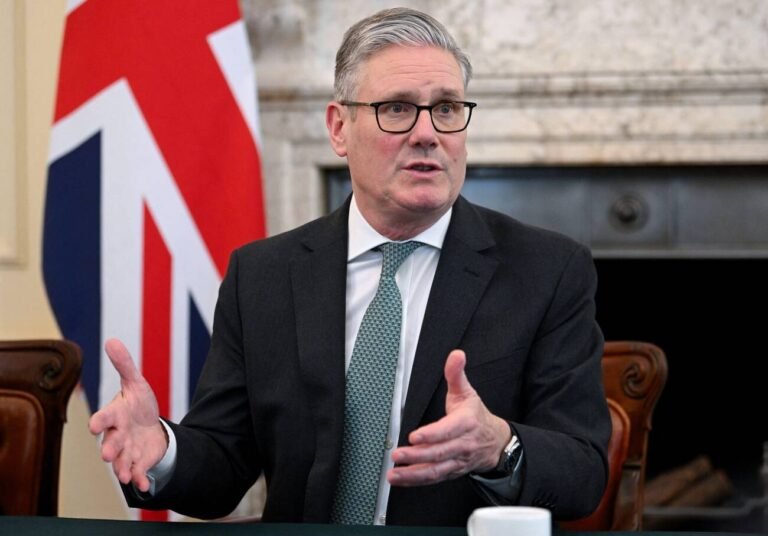
On March 26, Starmer permitted the US to use UK bases, reflecting the UK’s role in the US-Iran conflict. Although Starmer publicly stated that the conflict between Iran and the US is not the UK’s war and that the UK would not allow the US to use its bases, subsequent developments suggest otherwise. Shortly after, an increase in US Air Force nuclear jets at a UK base raises accusations that Keir Starmer is ‘lying’ to the British public about his government’s role in the war on Iran. After Starmer’s statement, a US bomber capable of carrying 24 cruise missiles landed in the UK. This development indicates Starmer’s involvement in the US-Iran conflict.
UK’s role in the US-Iran conflict: Keir Starmer is lying
US Air Force nuclear jets arriving at a UK base suggest Starmer misled the public about the government’s involvement in the war with Iran. The US is reportedly using Fairford for strikes on Iranian missile facilities, a key Pentagon objective.
On March 26, three more B-1B Lancers arrived at RAF Fairford, bringing the total bombers at the UK base to 21—one of the largest recent deployments. There were about 15 B-1Bs and six B-52Hs at the base in southwest Britain, according to spotters, air traffic control, and flight-tracking data. The 15 B-1s represented roughly a third of the Lancer fleet.
Britons’ Idea About Noninvolvement in the Middle East War
As the US-Iran conflict continued into another week, polling revealed that Britons were divided over Keir Starmer’s handling of the UK’s response: 38% thought he was doing well, while 43% believed he was doing badly. During this period, Starmer received criticism from both sides in the conflict. Some were dissatisfied with his lack of support for the US and Israel, while others felt he failed to sufficiently keep the UK out of the conflict.
Many Britons question Starmer’s sincerity about keeping the UK out of the US-Iran conflict. By allowing continued US access to UK bases, the UK appears complicit. Critics argue the UK should break military ties with the US and maintain full independence from this optional war.
UK’s Role in the US-Iran Conflict: Not Our War
UK Prime Minister Keir Starmer has taken a firm stance on the conflict in Iran. He said it is “not our war” and insisted Britain won’t get involved militarily. Starmer spoke during a campaign event in Wolverhampton. He emphasized that the UK will protect its citizens and interests, support allies in the Gulf, and avoid being pulled into a wider conflict.
The remarks may further strain ties with US President Donald Trump. He has often criticized NATO allies, especially the UK, for what he sees as too little support. Trump has also personally targeted Starmer, saying he offered military help only after the conflict’s key phases had passed.
Starmer Changes His Idea about Helping Trump
On the heels of President Donald Trump’s statements about considering a US withdrawal from NATO, British Prime Minister Keir Starmer reiterated that the war in Iran is “not our war” and the UK would not be drawn in. At this stage, Starmer stated his government was “working at pace” to support de-escalation and peace, while also acknowledging the conflict could impact the country’s future.
He said Foreign Secretary Yvette Cooper will meet to discuss Gulf maritime security. Asked if people should change their behavior during the energy crisis, Starmer said the government is watching the situation carefully. He said the UK must have closer ties with Europe on defense, security, and the economy. This came after Trump raised the possibility of a US withdrawal from NATO.
Starmer’s permission for the US to use UK Bases
The UK’s role in the US-Iran conflict is clear. Sir Keir had initially refused to grant permission for the US to use UK bases in its joint offensive with Israel against Iran, which caused a disagreement with President Donald Trump. Trump told journalists in the Oval Office earlier this week he was “not happy with the UK” over the decision, which led to US planes “flying many extra hours” to carry out strikes last weekend.
The arrival of the large aircraft followed US Defense Secretary Pete Hegseth’s statement on Thursday that strikes on Iran were “about to surge dramatically.” Soon after, a US bomber capable of carrying 24 cruise missiles landed in the UK. This took place after Prime Minister Sir Keir Starmer approved “defensive” US actions against Iranian missile sites from UK bases.
UK Ministers: For and Against US-Iran Conflict
At a top-secret National Security Council (NSC) meeting last Friday, Starmer suggested allowing the US to use RAF bases for defensive strikes. Several cabinet ministers, including Yvette Cooper, Shabana Mahmood, Ed Miliband, and Rachel Reeves, opposed the UK’s role in the US-Iran conflict.
Starmer insisted that “all ministers” on the national security council had supported the UK position on the use of British bases. He rejected reports that he had faced cabinet opposition led by Miliband. The Guardian understands, however, that all options were discussed at the NSC meeting on Friday.
UK’s Role in the US-Iran Conflict: Conservatives Say
Sadiq Khan said Starmer was right to resist US pressure to join strikes on Iran. He strongly criticized the “war of choice,” calling it a unilateral act. He said it lacked international backing, UN approval, and any real strategy. Starmer had a call with Saudi Crown Prince Mohammed bin Salman. The prime minister said the UK stood ready to help defend the country.
At the Conservative Party’s spring conference, Kemi Badenoch said Starmer was too scared to intervene abroad. She said the UK is “in this war whether Keir Starmer likes it or not.” She accused Starmer of “sitting on the fence” over the Middle East conflict. Badenoch said the government should stop missile sites by striking at the source. She has pressed for UK action against Iran’s missile launch sites.
UK’s Role in the US-Iran Conflict: Conservatives Say
The Tory leader said the Greens won the by-election, which “spooked” Labor. He claimed Starmer now fears foreign action for the risk of upsetting a small group of voters. “Everyone remembers the Iraq War mistakes. No one is suggesting dropping bombs without thought. But Keir Starmer spent days consulting lawyers, hesitating to say whose side he was on,” he said.
Badenoch had sparked a row over her suggestion that UK military jets had been “just hanging around” and not taking the necessary action in the Middle East