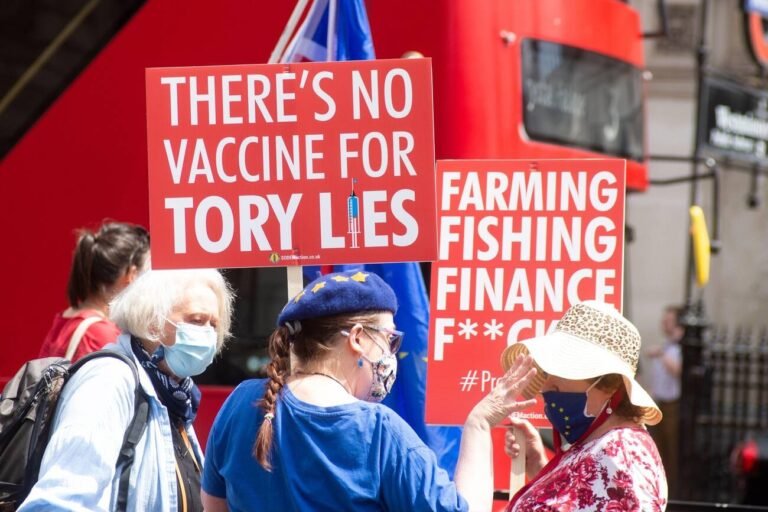
It is Brexit’s 6th anniversary. The British people’s view of Brexit changed, as it did not lead to any progress or improvement. Importantly, Brexit led to isolation and a higher cost of living for the UK. Six years on from the UK’s official exit from the EU, the UK has experienced inflation outpacing wage growth, leading to a decline in real disposable income.
The government came to office promising to reset relations with the European Union. The reset matters much more to the UK government than it does to the EU. Starmer’s reset could give Britain access to the single market. Enhanced British ties with the EU could risk angering the Trump administration.
Brexit’s 6th Birthday: Who is happy?
It is Brexit’s 6th anniversary. The UK officially left the European Union on January 31, 2020. It has been 6 years since its exit from the bloc. Brexit promised flourishing trade, increased border controls, and cash boosts for the NHS. But none of this has happened. The British government and major political groups are afraid to celebrate the anniversary.
Few now think Brexit has been kind to the UK, politically, economically, or socially. Little by little, friction at customs is slowing down trade with the European Union, and investment is becoming scarcer.
It’s not a collapse, but more of a crumbling. Polls regularly show a clear majority of the public now favours rejoining the EU. Brexit has cut the UK economy by up to £140 billion. The UK could be more than £300 billion worse by 2035.
Export barriers have added an estimated £8.4bn in costs. Goods trade has decreased by an estimated 18%. Food and drink trade with the EU has dipped by 24%. By 2025, Brexit had reduced UK GDP by 6% to 8%.
UK investment is up to 18% below pre-Brexit levels. Employment and productivity went down 3-4%. Brexit is on course to reduce the UK’s trade intensity by 15%.
Brexit’s 6th anniversary: False Liberation, Real Isolation
Six years on from the UK’s official exit from the EU, it’s clear that Britons have all been bruised in a thousand different ways from their decision to detach themselves from their largest trading partner. The economy has struggled, businesses have battled new red tape that has seen many strangled out of trading with the EU, and the UK’s international reputation has been hammered.
Most of them are poorer due to the economic devastation caused by Brexit. Young people have been crippled by the loss of their right to live and study in Europe. The political scene has been fragmented due to the decision, which has divided rather than united the nation. Sovereignty is not as great a benefit as the loss of the above factors. Liberation has, in reality, become a lesson in the profound costs of isolation.
Cost of Living Crisis: A Gift for Brexit’s 6th anniversary
Since the end of 2021, the UK has experienced inflation higher than wage growth, leading to a decline in real disposable income (i.e., income after taxes). The cost-of-living crisis is translating into hardships for UK residents.
Rising costs also led to a 37% year-on-year increase in shoplifting in 2023. The UK is also facing a wave of strikes, including postal, railway, stagecoach, and bin workers, as well as barristers and doctors.
In response, the government lowered the age limit for workers. They can reduce the minimum wage from 25 to 21 and raise it by more than 30% since March 2021. Brexit has had a significant effect on the UK economy. Ceasing contributions to the EU budget made more for the UK than the result of withdrawal from the EU.
Consequently, the UK’s net contribution amounted to around 0.5% of GDP in 2018 (according to ONS statistics). The large-scale deregulation promised by Brexit supporters has yet to be seen.
Brexit’s 6th anniversary: Starmer’s reset and Trump’s Threat
Britain is torn between Europe and Trump. Each anniversary of the UK’s departure from the EU on January 31, 2020, is marked by intense debate over the success or failure of a seismic shift in British foreign and economic policy, and over where Britain now stands in the world. The government promised to reset relations with the European Union.
The reset matters much more to the UK government than it does to the EU. Leaving a notional free trade zone of at least 50% of the trade leads to negative economic outcomes. Starmer’s reset” bill wants to make a stronger and closer relationship with the EU.
But the debates this year have an added edge. The geo-political waters already churned up by the Russian invasion of Ukraine have been turned into a frothing frenzy by Donald Trump.
The American president has hinted he might invade the sovereign territory of a European state and impose tariffs on the UK if it opposed the land grab, while all the time sowing seeds of doubts in British minds that Washington was no longer really committed to NATO. This organization constitutes the bedrock of Britain’s security.
Starmer’s reset: Britain’s position toward the EU or the U.S
Britain’s place in the world has been under a magnifying glass. Has it been left exposed and alone in an increasingly perilous and turbulent sea, or has it given it the flexibility to swim through these waters and a world of shifting allegiances? In truth, this debate, which boils down to whether Britain moves closer to the EU or the US, has been around since the 2016 referendum, but in today’s world, it has become starker, almost a matter of national survival.
Lord David Frost served as the UK’s chief negotiator for its exit from the EU from 2019 to 2020 during Boris Johnson’s Conservative government. He recently wrote that the answer to the question is to forge closer ties with the US, because America, unlike Europe, is the only guarantor of the iron-clad security that Britain needs in a dangerous world.
In return, the UK must be a credible ally again and spend much more on defence. It must accommodate itself to US realpolitik and ultimately exit the European economic and regulatory system. It means becoming another Israel to the US.