

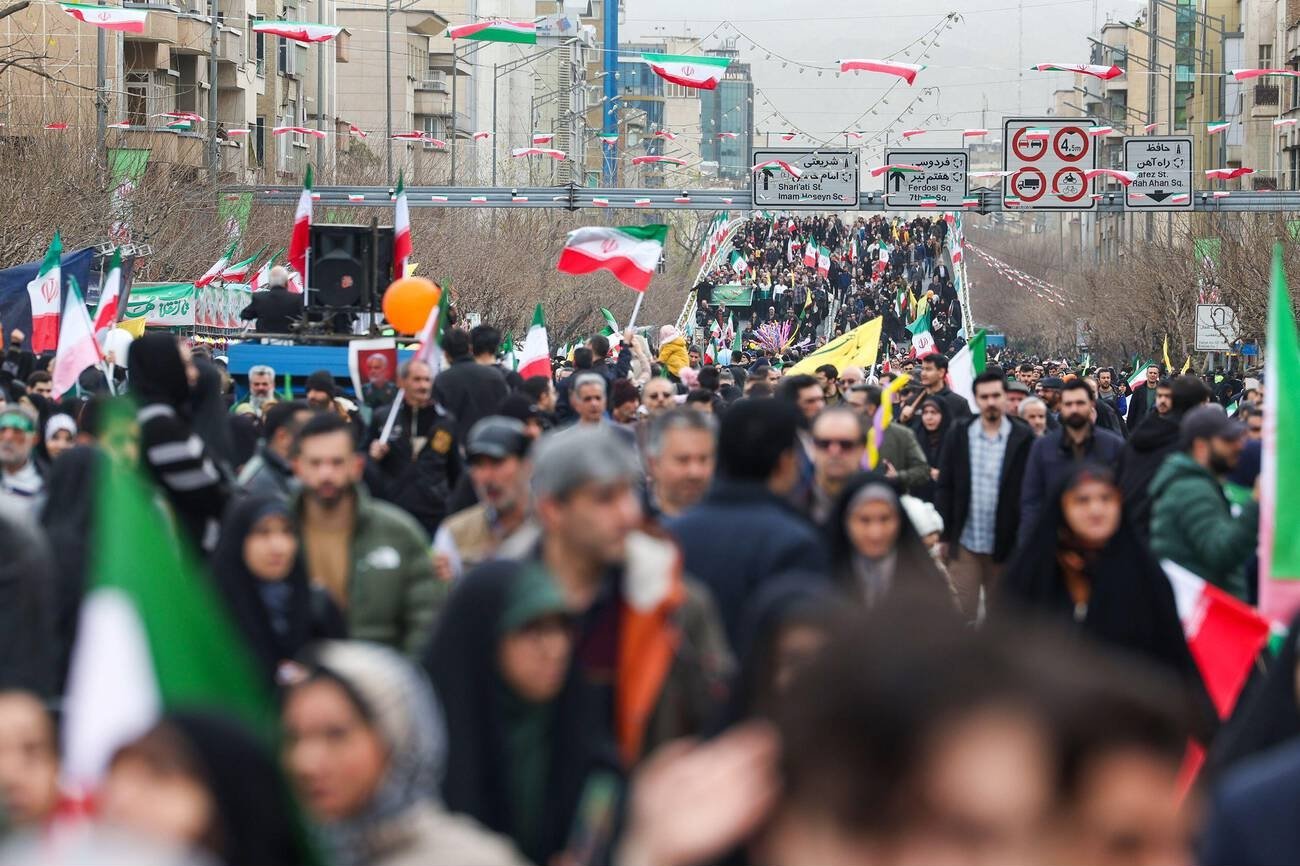
The 47th Anniversary of the Islamic Revolution in Iran were held. Forty-Seven years ago, the Iranian revolution sent a shockwave through the Middle East. The anniversary of the Islamic Revolution marks the culmination of a 10-day celebration. It mirrors the 10-day revolution from February 1 to February 11 of 1979.
This anniversary is marked not only by government-organized celebrations but also by heightened political tensions. Despite opposition from the U.S President and attempts by Israel to counter the event, Iran’s Leader, Ali Khamenei, has called for unity and mass participation. The turnout is expected to be high, as both supporters and some critics of the regime see the revolution as a pivotal moment in Iran’s identity—either for overthrowing the monarchy or promoting Islam.
Background of the Islamic Revolution
Forty-Seven years ago, the Iranian revolution sent a shockwave through the Middle East. It overthrew the Western client, Shah Mohammad Reza Pahlavi, and brought to power the Islamic regime of Ayatollah Khomeini. In the Islamic Republic of Iran, the overthrow of the Pahlavi Dynasty during the 1979 Islamic Revolution is commemorated as a national holiday. In 2026, the anniversary of the Islamic Revolution falls on a Wednesday, February 11.
On January 16, 1979, Shah Mohammad Reza Pahlavi left Iran amidst large protests. He entrusted Shapour Bakhtiar with the position of prime minister. Bakhtiar’s task was to establish a secular civilian administration. Khomeini returned to Tehran from France on February 1, 1979, after almost 15 years in exile.
The revolution anniversary concludes a 10-day celebration that mirrors the events of February 1–11, 1979. The regime strongly promotes Islamic Revolution Anniversary Day. It celebrates the revolution that brought them to power.
Some Iranians who oppose the current regime may also celebrate. They value the revolution for overthrowing the monarchy and promoting Islam.
Iran Cooperating with China and Russia and its Ideology: Highlighting the Country
Iran’s recent integration into international groups such as the SCO and BRICS, and its strategic alliances with China and Russia, underscore the country’s importance on the global stage. The anniversary also underscores the high stakes in Iran’s political landscape, as its domestic stability shapes broader international alliances and regional power dynamics.
Iran is as committed to exporting the Islamic Revolution today as in 1979. This pledge is included in Iran’s constitution. Iranian leaders’ public remarks show ongoing efforts to spread ideology outside Iran. Khamenei discussed this in 80 percent of his speeches analyzed, the same as Khomeini.
Pahlavi’s Attempts to Return to Iran
Reza Pahlavi, the son of Iran’s former Shah, has expressed his intention to return to Iran from exile in the United States. He has not specified a return date, and it is unclear whether Iranian authorities will permit his entry or what consequences he may face as an opposition politician. Protests erupted across Iran in late December over economic issues and inflation, expanding into broader demonstrations against the government.
In a video on X, Pahlavi said Iranians want a ‘new and credible path.’ He added: ‘The battle in Iran today is between occupation and liberation. The Iranian people have called me to lead. I will return to Iran.’ His late father, the Shah, had appointed him crown prince. Pahlavi has lived in U.S. exile for decades.
U.S Threats and Warns for Iran and Khamenei’s Message
U.S. President Donald Trump warned that Iran’s supreme leader should be “very worried,” as both sides prepare for their first formal negotiations since the United States bombed Tehran’s nuclear program last year. Tensions between the two countries have escalated sharply in recent weeks following a deadly crackdown by Iranian security forces on nationwide anti-government protesters.
The crackdown prompted Trump to send a U.S. military “armada” to the region and threaten to launch strikes. The U.S President is trying to prevent the 22nd Bahman (February 11) March from happening in Iran. Meanwhile, in Israel, Blue and White Party leader Benny Gantz said on Monday that he hopes Prime Minister Benjamin Netanyahu can convince the Trump administration to make a historic decision that would end Iran as a strategic threat.
However, despite all the tensions and threats, Khamenei’s message to the people of Iran is clear. Iranian Leader Ali Khamenei has called on the Iranian people to demonstrate steadfastness and national will on the upcoming 47th anniversary of the Islamic Revolution, marking Bahman 22nd (February 11). Iran’s Supreme Leader, Khamenei, urged his nation to unify as the United States has been boosting its military presence in the Gulf region.
47th Anniversary of the Islamic Revolution of Iran: Khamenei’s Call on Iranians’ Presence
After anti-government protesters were killed in late 2025, regime supporters rallied across Iran. They backed Iran’s regime and Islam against enemies like America and Israel. Khamenei delivered a televised speech ahead of the annual rallies. He called 22 Bahman an expression of Iran’s power, dignity, and independence. He urged all residents to join the protests to discourage enemies. ‘Bahman 22nd is the day of unveiling Iran’s power and dignity,’ he said, stressing its significance.
AFP cited the Iranian leader as calling on his citizens to show resolve ahead of the 47th anniversary this week of the Islamic Revolution that brought the mullahs to power. “The enemy must be driven to despair.
The enemy’s despair comes through [our] unity, strength of thought and determination, and steadfastness in confronting the enemy’s temptations. These are what build national power,” Khamenei tweeted. The enemy’s despair comes through unity, strength of thought and determination, and steadfastness in confronting the enemy’s temptations. These are what build national power.
Iranian People Supporting Their Regime Despite all Oppositions
Western media talk about the destruction of the Iranian mullah-centric regime and report on the dissatisfaction of the people in all regions of the country, as all the media associated with America and Israel have been broadcasting the same for a long time.
In contrast, mainstream media in Iran have a different reflection that shows the support of the Iranian people for their regime. Supporting this unjust and oppressive regime by people of various groups who are opposed to it is surprising.
Iranian people have always been present in the field in support of Iran and the regime of Mullahs brought by Khomeini for the past 47 years; from the magnificent presence in the 2019 referendum to the full-scale support for the Islamic regime in the million-strong march on January 12 of this year, which was a reaction to the civil war and the quasi-coup by the West and their mercenaries, these are just examples of these 47-year-long unceasing resistance.
The news around their universities, academic institutes, local media, the mainstream media, and even the social media echo a large and prominent participation of Iranian people in the February 11, 2026 march. Their presence is a response to Khamenei’s call for more participation to show the power of their country.
