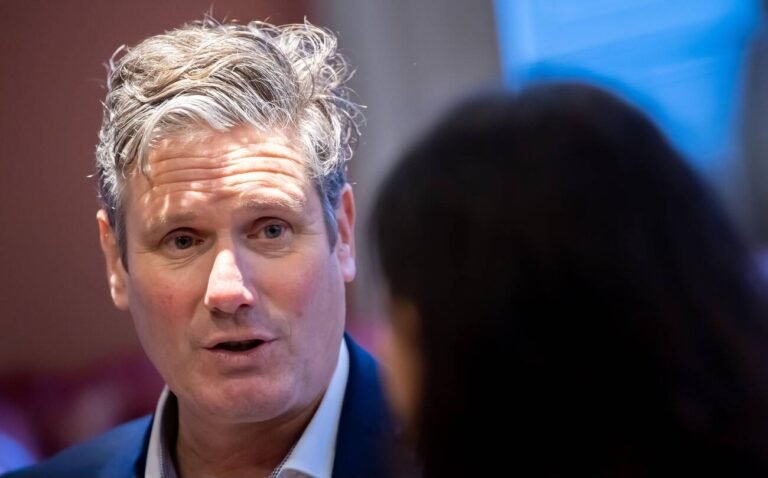
Britain is in a mess again, and it is all about the people in charge. The British Prime Minister, Keir Starmer, is getting a lot of criticism from his party. This is because the Labour Party did not do well in the elections in May 2026. Over the past few weeks, some important people in the government have quit their jobs. Many others are talking about their doubts. They are doing it quietly. Surveys also show that people are losing trust in the parties. The Keir Starmer leadership crisis is a part of a larger problem in British politics. This article will look at why the leadership crisis in the UK is happening and what might come next if things do not change.
The Cycle of Political Instability in Britain
This kind of thing has happened before in Britain. In the past ten years, the country has had six different prime ministers. David Cameron stepped down after the Brexit vote. Theresa May could not get everyone to agree on Brexit. Boris Johnson got in trouble. Liz Truss was in office for 49 days because her economic plans scared people. Rishi Sunak had to deal with inflation, strikes and immigration before he left. Now Keir Starmer is facing these problems even though he promised to make things stable. It seems like people are used to leadership crisis in the UK.
What Happened in the Local Elections of May 2026
The Labour Party thought they would do well in the elections in May 2026. They actually lost seats in areas that usually vote for them. This was a wake-up call for Keir Starmer’s government. Many people in the Labour Party are unhappy because life is expensive, and nothing has improved.
Some people think Keir Starmer has not done what he promised when he became the Prime Minister. Others say the government is just trying to fix problems without making any changes. After the election, some people in the government spoke out against the party’s policies. The question of whether Keir Starmer should be the leader became a big topic. The Keir Starmer leadership crisis is a deal, and it is all about the future of the Labour Party and Britain.
Keir Starmer Leadership Crisis and Tensions within the Cabinet
The first and foremost threat to the current leadership might come right from the ranks of Starmer’s cabinet. Over the past couple of weeks, there have been many top Labour figures who have wanted to distance themselves from some of the government’s policies.
Indeed, it was rumored that some of the cabinet members were against the budget cuts and delays in investments in infrastructure projects. They feared that their party would suffer an image loss before the general election because of the worsening living conditions. While it is a fact that tensions within the cabinet are nothing new in the United Kingdom, the advent of social media and the 24-hour news cycle have definitely made such conflicts much more dangerous than before. The Keir Starmer leadership crisis exemplifies the weakness of political authority in Britain.
Brexit and Growing Social Divisions
The consequences of Brexit remain present in Britain even after nearly a decade since the occurrence of the referendum. Britain still faces divisions on matters related to identity, immigration, trade, and values. The economic promises made following the withdrawal from the EU have failed to be realized, and this makes people feel like their leaders have betrayed them.
The economy of the country remains weak compared to other European countries. Furthermore, inflation and expensive housing keep pushing the citizens who work hard in difficult situations. Social media has also been fueling political polarizations in the country. Political debates become highly emotional to the extent that political leaders cannot reach agreements. This is viewed as one of the causes of leadership problems that the country currently faces.
The Impact of Economic Hardship and Public Dissatisfaction
The economic hardships of Britain continue to influence the public mood even in 2026. Despite the recent inflation rate staying over 3 percent, the energy and housing prices continue to remain high in many parts of the country. Wage increases did not match the rising costs of everyday life for many families. The promise of economic stability after years of political turmoil made by the government did not make many people feel economically secure.
People’s dissatisfaction is caused by the expectation of quicker results following the pandemic and Brexit years. Opinion polls conducted in May 2026 showed that more than 65 percent of respondents thought that Britain was going in the wrong direction. This issue is relevant to the Keir Starmer leadership crisis since economic circumstances have a significant impact on the level of public trust.
Reasons Why Long-Term Reforms Have Become Difficult
The continuous political instability and the leadership crisis in the UK have made the task of carrying out long-term reforms very hard. Each new prime minister brings his own priorities, advisors, and ministers. Many projects get delayed or shelved before the governments can carry them out.
Issues like health care reforms, pensions, transport infrastructural developments, and housing policies need continuity in leadership that spans several years. But this is not possible in present-day conditions due to the leadership crisis in the UK. Instead, governments are always preoccupied with their survival and public relations. Political leaders take months trying to rearrange their ministers and regroup the parties after each crisis. In this way, public confidence becomes shaken since the citizens never witness any improvement in public service. Thus, the leadership crisis in the UK has now gone beyond being political.
The Impact of Media and Political Pressure
Contemporary media has been another factor that has increased political instability in Britain. Continuous twenty-four-hour news coverage and the use of social media platforms place continuous pressure on political figures. Today, journalists are quick to report every single dispute, rumor, or policy problems. Political scandals spread quickly online and tend to dominate public discussion for several days.
At times, ministers end up losing public approval before they can be able to explain their positions regarding government policies. This makes it increasingly hard for political leaders to make rational decisions. Most politicians today are concerned about avoiding controversies rather than applying difficult changes. Keir Starmer’s leadership crisis is partly due to the fact that disputes within the Labour Party were quickly made public. This makes current political leadership in Britain less stable compared to decades ago.
Risks for Britain’s Political Future
If political instability continues in Britain, the country might encounter more difficulties in the near future. Some analysts even claim that there is a possibility that the nation will require some structural political reforms in the future. Electoral reform, House of Lords reform, and constitutional reform are some of the issues that are often discussed nowadays.
Another concern is that instability may lead to political radicalization and anger among citizens. Once the electorate begins to distrust mainstream political parties, it starts to give preference to radical political organizations. Britain has already faced an increasing number of votes for protest parties in a number of local elections. Discontent among the people may grow if the governments fail to raise the standards of living and restore trust in the government.
The Uncertain Political Future of Britain
Britain is in another period of political uncertainty as the nation continues to battle with economic and social pressures. The current crisis is the result of political divisions, lack of public trust, economic frustrations, and deep divisions within the nation.
The Keir Starmer leadership crisis is not the first that has happened in British politics since the nation’s Brexit. Instability has become the norm in British politics in recent times, with frequent leadership crises making planning very difficult. Without stable and trusted political leadership, Britain will continue to go through cycles of political crisis and temporary governments.