The UK Military presence in the Middle East has moved into a new, more complex phase as London’s foreign policy drifts toward a noticeably more active security posture in the Strait of Hormuz. In recent weeks, the United Kingdom seems to have shifted from a fairly cautious diplomatic approach to a more operational, intervention-minded stance.
Not long before this, British officials strongly supported restraint and tried to stay away from any military escalation connected to Iran. They wanted to avoid deeper involvement in tensions linked to Israeli-American operations. The article looks at the UK’s movement toward a more engaged military role in the Middle East, with special attention to its presence and tasks in the Strait of Hormuz.
Deployment of the British Military Forces in the Middle East: From Cautiousness to Deployment
Only a few weeks prior to the military confrontation, the British government was adamant about maintaining their neutrality about the war against Iran. Domestic political considerations and international legal concerns shaped their cautious approach. These factors formed the basis of their reasoning. The Iraq War still carries weight in British foreign policy decisions. British politicians always keep the consequences of the Iraq War in mind. They consider these consequences when discussing prolonged military presence in the Middle East region.
During the period under analysis, Britain pursued a diplomatic approach. The aim of this approach was to reduce tensions between the parties involved. Therefore, during the Gulf confrontation, Britain was unwilling to engage itself into conflict situations. The justification of the deployment of military forces in the Middle East was presented as a necessary defensive step.
Decision to Deploy and Strait of Hormuz
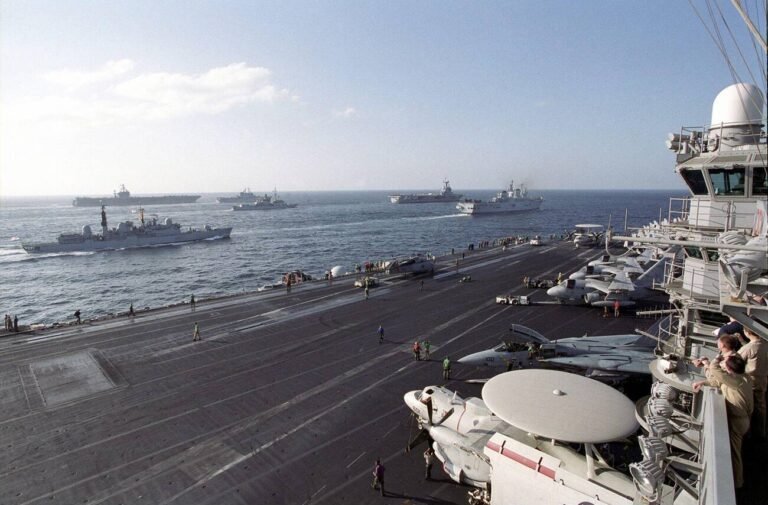
The most significant turning point occurred on May 12, 2026, when the government of the UK made a decision to deploy fighter aircrafts, naval destroyers, drone surveillance devices, and other forms of military equipment for use in the multinational maritime security mission in the Strait of Hormuz. This decision was more than just having another ship in the map since it was indeed a move up from an observer status into being part of the mission and as such becoming an active participant.
In addition, the decision was also a transition from the initial plan of simply monitoring the area to being part of an actual military operation. The Strait of Hormuz is a crucial bottleneck in the world as far as the flow of energy resources throughout the world is concerned. This issue, coupled with the budget allocation of £115 million, further proves this point.
Operational Structure and Objectives of Strategy
Concerning the mission implementation in the Strait of Hormuz, the UK is offering a scheme with three operational axes that will ensure greater surveillance, mine detection, and coordination among allied nations. Firstly, the UK aims at continuous monitoring operations via air surveillance and patrol of important waterways. Here, the forces aim to identify potential threats and share intelligence with allied armed forces more quickly than their opponents.
Secondly, the UK plans to develop autonomous systems for mine detection and clearance operations. As we can see from the second axis, there is a shift towards the greater employment of warfare technologies as opposed to purely conventional methods. Thirdly, the UK is going to participate in command and control systems, along with a few other allied fleets and air forces.
Brinkmanship and Strategic Risk
It must be noted that there have been numerous studies of the current UK approach to its involvement in international affairs. The studies consider this approach to be brinkmanship, implying that a state tries to position itself in a risky position in order to increase its strategic role by making it extremely difficult for other nations to risk anything, but without bringing themselves into full-scale conflict with the country in question. If one considers this problem from the perspective of the Strait of Hormuz in particular, this implies increasing one’s military force in regions where it could potentially be used. It is important to note that this may not involve direct fighting.
Diplomatic tactics vs. Military command
The new strategic change can also be interpreted as a broader change in British foreign policy. Previously, Britain maintained a balanced approach to diplomatic leverage along with a minimal presence in military operations in the Middle East. But current developments show that Britain is now taking a more aggressive and proactive stance.
The United Kingdom is now taking part in the procedure and engaging in multilateral efforts. This development is not purely diplomatic but rather operational. It becomes even more apparent when viewed against past promises made by the British government. In March 2026, British officials announced that the UK would avoid being drawn into a broader war. They also stated that Britain would not take part in any escalation against Iran. Despite the claim that Britain’s foreign policy remains defensive and non-provocative, its stance has clearly changed.
Economic and Security Considerations
Aside from the political considerations mentioned above, the economy becomes another important factor to consider. The Strait of Hormuz is vital in terms of energy transport in the world.
An interruption in the route has an immediate effect on the prices of energy in the international market. Hence, the preservation of this route is an international issue rather than a national concern alone. However, the sustenance of troop presence is an economic challenge itself. For instance, £115 million assigned for the mission serves merely as a budget for the initial phase of the activity. This indicates that more funding is necessary for undertaking further actions.
Move towards an operational stance by the military
Recently, the UK has made certain changes in how it operates regarding its military operations in the Middle Eastern region. This issue shows that there has been a change in the British foreign policy priorities. Britain has decided to involve its navy, air fleet, and modern technology in in the Gulf region conflict that the US and Israel have started. This step shows a shift in Britain’s foreign policy approach.
Britain has moved from a mainly diplomatic role toward a more operational one. The UK government claims that these operations are purely defensive and aimed at ensuring maritime security in the region. However, the scale and nature of the operations suggest that Britain may be becoming more involved than previously expected.