SNP Wins Without Majority
The Holyrood Election in 2026 for Scotland has made a turning point in the politics of Scotland as a whole. These results showed a major shift in political power within the Scottish Parliament. The Scottish National Party won the election and remained the largest party in parliament. However, it did not secure the 65 seats required to form a working majority government. A breakthrough has occurred for Nigel Farage, leader of Reform UK, with results from the Holyrood Election in 2026. Evidence suggests that political opinions in Britain are becoming more extreme, which is making Scotland’s political landscape increasingly complex. This article examines the 2026 Holyrood Election in detail, with a focus on declining trust in mainstream parties and the rise of Reform UK.
SNP Wins Election, but Fails to Achieve a Majority
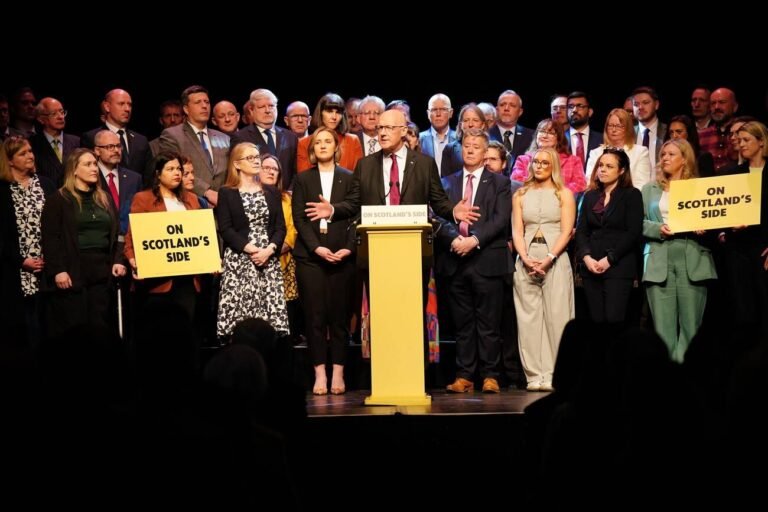
The Holyrood Election in 2026 report on the success of the SNP election campaign; the Scottish National Party, despite winning a majority of seats in the Scottish Parliament, failed to secure the 65 seats necessary for an unfettered Scottish government. With the results, John Swinney will head up the new Scottish Parliament; he aims to increase the number of Scottish independence supporters. Swinney celebrated with party members following the announcement of the results, although criticized Labor for neglecting Scotland’s needs.
With further pressure being placed on all governments Swinney’s government, regardless of achieving election success, is subject to an increasing amount of criticism, voters believe they have failed to make progress over recent years in the realms of health, housing and education, many felt that changes were needed and that the Holyrood Election in 2026 represented a second referendum, not on independence, but on the governments’ successes and failures.
Reform UK Makes History
With great interest many saw the Holyrood Election in 2026 as one that made history, with Reform UK breaking into the Scottish Parliament for the first time, a milestone in Scottish politics, with much focus in the past on independence and the relationships with London it may be believed that Nigel Farage had an impact as he has steered political debate in other areas, namely immigration and economic policy, his supporters feel that voter support is decreasing in the established parties and as such voters may not feel they align to the interests of Westminster, and feel unrepresented by current policies and views of Westminster and SNP parties. Immigration seems to have captured the imagination and concern for this country as the population believe that the economy must be supported above all else.
Green Party Continues Its Advance
The results of this election also show a benefit for the Scottish Greens; The Green Party won more seats compared to the previous election. As a result, it now has greater political influence and can play a stronger role in shaping future decisions. It puts them in a powerful position in forming the future government. There will undoubtedly be some conflict about climate policy; the Green Party will continuously push for more and greater action on climate issues and investing money into renewable resources, whereas other parties, such as Reform UK and the Conservatives, continue to argue that too much pressure will put too great a strain on people’s everyday lives. So they continue to disagree on how to approach energy and government spending in Scotland over the coming years.
Dropping Voter Turnout Reflects Anger
A major feature of the Holyrood Election in 2026 was the collapse in voter turnout from previously higher elections, reflecting a general anger and disillusionment with the political situation in the country. The major political parties have failed to fully address the concerns and demands of voters. As a result, many voters shifted their support to alternative parties during the election. Trust in our political institutions is eroding, resulting in apathy.
In Scotland, public anger has grown over long waiting times for hospital appointments and treatment. This frustration is also driven by housing shortages and the steadily rising cost of living. Some voters felt their MPs in Westminster were overly focused on constitutional issues at the expense of more mundane economics. Reform UK represents the further expansion of protest voting as people choose to vote against established institutions and parties.
The Future of Scottish Independence
The Scottish independence issue has been highlighted again at the 2026 Holyrood election, and even though the SNP remains the largest party, its power has declined because the SNP was not able to obtain an absolute majority at the Holyrood. Public support for a second independence referendum appears to be weakening across Scotland. Reform UK strongly opposes independence, while Labour remains cautious and sceptical about any constitutional change.
Pro-independence parties cannot agree on a common strategy because they hold different views about the right time to carry out their plans. Scotland’s constitutional future now appears increasingly uncertain as political parties continue to debate the country’s next direction. People expect John Swinney to continue defending Scottish interests, but they also believe he may need to adopt a more moderate approach in future negotiations. To succeed, SNP has to receive the full support of the majority to carry out planned activities effectively.
Disputes over the Budget and Political Gridlock
Difficult parliamentary negotiations are likely expected in the future by many political observers, and the disputes between the SNP, Greens and Reform UK over the budget would have to occur. Their main disputes will revolve around three fundamental issues: the environment, spending, public services, and taxation. Coalition governments often face political deadlock because different parties must compromise on major decisions. This can slow the legislative process and make it harder for parliament to pass important laws.
The situation is especially serious because Scotland is already dealing with major economic and social problems. The Holyrood Election in 2026 created a more competitive political environment in Scotland. At the same time, it also made the political situation more fragile and uncertain. The electorate had shown their displeasure with the previous politicians, but the outcome only promises greater political instability rather than solutions.
A New Era of Politics after the Holyrood Election in 2026
The Holyrood Election in 2026 has substantially altered the nature of politics in Scotland. The SNP remained the largest party in the Scottish Parliament after the election. However, it failed to secure an absolute majority, which increased political pressure from opposition groups. The Greens achieved their most significant success, whereas Reform UK experienced a landmark victory.
The Holyrood Election 2026 indicated that the electorate had lost faith in the established political leaders. Healthcare and housing were among the biggest issues that shaped the election campaign. In addition, many voters were concerned about immigration policies and the overall condition of the economy. The Scottish political climate will demand continuous political negotiation for years to come, and perhaps the 2026 Holyrood Election was a turning point for a new era of political uncertainty in Scotland.